Mention the word summit nowadays and most people will probably envision a meeting involving suits, cigars, old men (and a few women), lots of talk, copious amounts of hard alcohol, and piles of taxpayer money. And all for naught.
But there’s a different definition for summit, one that evokes images of impossibly high peaks rising black and vertical above the snowbound shoulders of mountains. This is the image I want you to see when I tell you that I went to the ECOSummit this weekend. It was a meeting, and it did have men and women present, but the similarities between this summit and the aforementioned cease there.
Because this meeting was about climbing mountains. Many of the speakers (and many of the audience, too) had experience facing the mountain. They had made attempts at the lofty goal, impossibly high. They had bruised themselves on it’s unyielding stones. They had become disoriented in the thin air and the heavy fog that swept in with no warning. They had been caught in sudden, sodden rainstorms, driven by icy winds that winnowed the cold into their bones and forced them back down to the shoulders of the mountain, their own shoulders slumped under the weight of defeat. And yet, once they had recovered, back up the mountain they trudged again. Ever hopeful; ever passionate; ever willing.
Others were on their first ascent, their packs and their smiles bright, their eyes wide open and expectant. They are beginning from the trailhead at the base of the hills, up the gentle path into the broad shoulders of the mountains. Through the glades of deep green grasses and yellow flowers. They move with vigor and the expectation of success. With clear eyes they regard the peak, high but possible. They also carry new gear and new knowledge. Perhaps the ascent will be easier for them. If so, it will be in part because they follow the path forged by their iron-willed predecessors.
A few who were there had reached the peak. You could see it in their eyes and in their bearing: the gleam of a knowledge that can’t be shared; the relaxed confidence of accomplishment. They know the way now. With their eyes closed they can recount each step, stumble, recovery, and, finally, the joy of looking down on the vast rolling shoulders that reached to the curve of the earth. They stood on the summit of the impossibly high peak and peered across impossible distances. They could and did kiss the sun. And now they watch, advise, and encourage others to do the same.
This event, this summit created the conditions for exposition, discussion, collaboration, and the opportunity to draw strength and sustenance from others who shared the same vision. As such, it was a success. And I’m glad I was part of it.

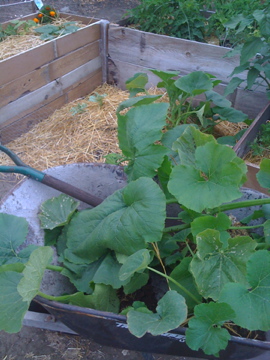
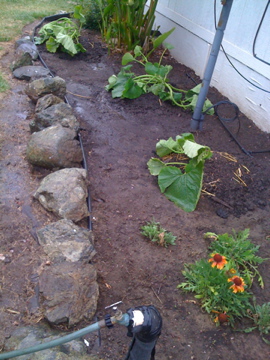


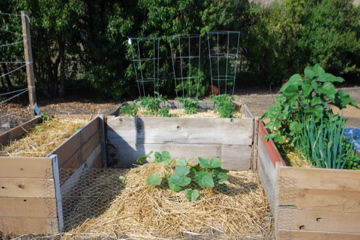

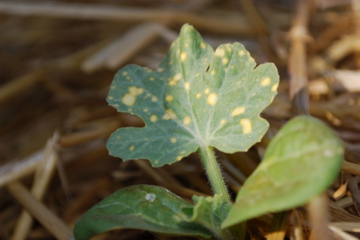




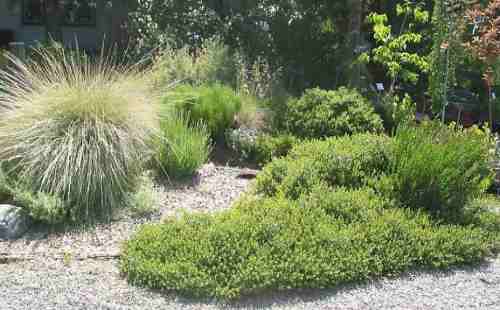
 The natives are very low maintenance. They can be very showy and spectacular like our California Lilac, Ceanothus, left,
  or low and inconspicuous like Pacific Mist Arctostaphylos, right.
 Pacific Mist loves coastal sandy gardens where it grows one foot high and 6-8 feet across. Then there are the fragrant varieties for your smelly garden. California Mock Orange (Philadelphus lewisii) center. Thumbnail pictures from



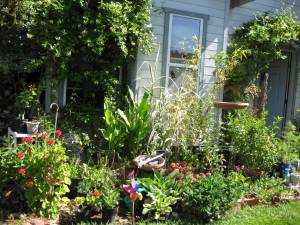
 Black, stripped, variegated, running and clumping bamboo for looks. Ginger, comfrey, borage, violets for all those reasons. My potted veggie garden this year is a Cherokee purple tomato. I put my basil right in there with the tomato and everyone is happy. I have onions and garlic in a window box planter. And the parsley is very happy in with the clover, chia and alfalfa. I grab a handful of this and mix it in the blender for a green smoothie.
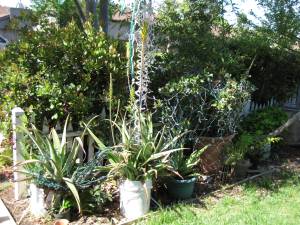
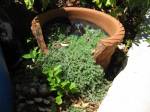 I use good organic soil, compost, mixed with a lot of coffee grounds I have collected from coffee houses. Coffee grounds make great drainage and the worms love it. Keep the soil light and airy and enough holes so the plants are never sitting in water. Only marsh plants like wet feet.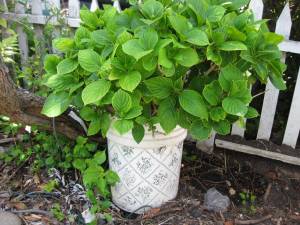



 Mom
Mom Izik
Izik Denette
 samsonblackwell


 Hole in the Fence
You must be logged in to post a comment.